



End-to-End Consumer Product Quality Solutions | Cotecna

Consumers expect the products they purchase to be safe, reliable and fit for purpose.
For manufacturers, brands, retailers and importers, meeting those expectations requires more than checking a finished product before it reaches the market.
Consumer products move through complex supply chains involving raw-material suppliers, manufacturers, laboratories, logistics providers, retailers and distributors. At every stage, there are potential quality, safety and compliance risks.
A product may pass a visual inspection but still require laboratory testing to evaluate specific chemical, physical or performance characteristics.
A supplier may produce high-quality products but require an audit to verify its manufacturing capabilities.
A product may meet technical specifications but require certification to demonstrate conformity with an applicable standard or scheme.
This is why a coordinated approach to consumer product quality assurance can be valuable.
By combining testing, inspection, auditing and certification according to the needs of the product and market, businesses can gain greater visibility across their supply chains and make more informed quality and compliance decisions.
Why Consumer Product Quality Requires an End-to-End Approach
Quality risks can emerge at almost any stage of the consumer-product supply chain.
These may include:
Raw-material sourcing
Component production
Manufacturing
Assembly
Packaging
Labelling
Storage
Transportation
Distribution
The requirements can also vary considerably between product categories.
A textile product may require testing for fiber composition, colorfastness or restricted substances.
An electrical product may require assessments related to electrical safety and other technical requirements.
Furniture may require testing for strength, stability and durability.
Toys and juvenile products may require specific safety and materials testing.
Our Consumer Products services cover a broad range of categories, including softlines, hardlines, electrical and electronics, furniture, leather and footwear, and toys and juvenile products.
This diversity highlights why consumer-product quality programs need to be tailored to the product, its intended use and its destination market.
Factory Inspections: Quality Control at the Source
One of the most effective ways to gain visibility into product quality is to inspect products where they are manufactured.
Factory inspections can help businesses assess whether production is progressing according to agreed specifications and contractual requirements.
Depending on the inspection scope, assessments may cover:
Raw materials
Components
Production processes
Workmanship
Product dimensions
Product specifications
Quantity
Packaging
Labelling
Markings
Manufacturing conditions
Conducting inspections at the factory gives businesses an opportunity to identify potential issues closer to their source.
Instead of discovering a problem after products have arrived at a warehouse or destination market, companies can potentially address issues while production is still underway.

Inspection Throughout the Production Process
A single inspection may not provide a complete picture of manufacturing quality.
For consumer products, inspections can take place at different stages of production.
Our Consumer Product Inspection services include several inspection stages.
Initial Production Inspection
Initial Production Inspection, or IPI, can involve checking raw materials or components and examining the initial production run.
This provides an early opportunity to identify potential quality issues.
During Production Inspection
During Production Inspection, or DPI/DUPRO, evaluates semi-finished or finished goods during manufacturing.
This can help identify deviations while production is still in progress.
Final Random Inspection
Final Random Inspection, or FRI, evaluates finished products once a defined portion of an order has been completed and export-packed.
This can help verify whether finished goods meet agreed specifications before shipment.
Pre-Shipment Inspection
Pre-Shipment Inspection evaluates qualitative and quantitative aspects of goods at warehouses or loading locations before shipment.
Cargo and Container Loading Supervision
Loading Supervision can help verify that an order is complete and correctly loaded into a container before shipment.
Together, these inspection stages can provide greater visibility throughout production and shipment.
Product Testing: Measuring What Inspection Cannot
Inspection can identify many visible or measurable characteristics.
However, some product properties cannot be confirmed through visual inspection alone.
This is where laboratory and technical testing becomes important.
Depending on the product, testing may assess:
Chemical composition
Physical properties
Mechanical performance
Safety characteristics
Material composition
Durability
Electrical characteristics
Restricted substances
Product-specific performance requirements
Our Consumer Products testing capabilities cover multiple categories, including softlines, leather and footwear, hardlines, toys and juvenile products, furniture, electrical and electronics, and food contact materials.
The appropriate testing program depends on the product, applicable standards, customer specifications and destination-market requirements.
Testing Softlines and Textiles
Softline products can include textiles and other flexible consumer goods.
Depending on the product, testing may evaluate:
Fibre composition
Colourfastness
Physical properties
Performance
Chemical parameters
Restricted substances
Durability
Testing helps businesses obtain objective data that may not be available through visual inspection alone.
Testing Leather and Footwear
Leather and footwear products can involve a combination of material, physical, chemical and performance requirements.
Testing can help assess characteristics such as:
Material properties
Physical performance
Chemical composition
Durability
Product-specific requirements
The exact testing program should be based on the product and target market.
Hardlines, Furniture and Other Consumer Products
Hardline consumer products cover a broad range of goods.
Depending on the product, testing may assess:
Physical performance
Mechanical strength
Durability
Safety
Materials
Construction
Chemical characteristics
Furniture products may require specific assessments related to strength, stability and durability.
This illustrates why consumer-product testing must be adapted to the individual product rather than relying on a single testing program.
Electrical and Electronics Testing
Electrical and electronic products introduce additional technical considerations.
Depending on the product and market, testing may address areas such as:
Electrical safety
Performance
Energy Efficiency
Product construction
Electromagnetic Compatibility (EMC)
Wireless
Applicable regulatory requirements
Specialized laboratory expertise is particularly important for products where safety and technical performance are critical.
Toys and Juvenile Products
Toys and juvenile products require particular attention because of their intended users.
Depending on the product, testing may address:
Physical safety
Mechanical characteristics
Materials
Chemical parameters
Product design
Applicable safety requirements
The applicable requirements vary according to product type, age range and destination market.
Auditing the Supply Chain
Product quality is influenced by more than the finished product.
The capabilities and practices of suppliers and manufacturers can also affect quality outcomes.
Supplier and factory audits can help businesses evaluate:
Manufacturing capabilities
Technical resources
Production processes
Quality systems
Supplier qualification
Environmental practices
Social compliance
ESG requirements
Our Consumer Products services include audits that can support the assessment of supplier capabilities and ESG-related requirements.
Auditing can therefore complement product testing and inspection by looking at the organization and processes behind the product.
Certification: Demonstrating Conformity
For certain products and markets, certification can provide formal evidence that products meet the requirements of an applicable certification scheme or standard.
Certification requirements vary depending on:
Product type
Destination market
Applicable legislation
Industry standards
Certification scheme
Customer requirements
Our Consumer Product certification services include schemes such as the Global Recycled Standard (GRS), Recycled Claim Standard (RCS), Organic Content Standard (OCS) and Global Organic Textile Standard (GOTS), subject to applicable scope and requirements.
Certification can therefore form an important part of a broader product quality and compliance strategy.
Packaging, Labelling and Markings Matter Too
Quality assurance extends beyond the physical product.
Packaging, labelling and markings can also be subject to customer specifications and regulatory requirements.
Inspections may evaluate:
Packaging condition
Product labels
Product markings
Instructions
Warning information
Quantity
Product identification
Shipping marks
A technically compliant product can still encounter market-entry or customer issues if required information is missing or incorrectly presented.
Checking these details before shipment can therefore be an important component of consumer-product quality control.
Supporting Brands, Retailers and Importers
Consumer-product quality assurance is relevant throughout the supply chain.
Manufacturers
Manufacturers can use testing and inspection to verify product characteristics and identify production issues.
Brands
Brands sourcing from third-party manufacturers can use audits, inspections and testing to monitor suppliers and products.
Retailers
Retailers can use product testing, inspection and certification to support supplier requirements and product compliance programs.
Importers
Importers can use inspection and testing to evaluate products before shipment and support destination-market requirements.
Each organization may require a different combination of services.
Managing Supplier Quality
Supplier performance can have a direct impact on product quality.
A supplier that consistently produces products according to specification can reduce operational risk.
Conversely, recurring non-conformities can lead to:
Rework
Delays
Product rejection
Additional costs
Customer complaints
Shipment disruption
Regular audits and inspections can provide information that businesses can use when evaluating supplier performance.
This can contribute to a more structured supplier-quality management approach.
Using a Risk-Based Approach
Not every consumer product requires the same testing and inspection program.
A risk-based approach can consider:
Product category
Intended use
Target consumer
Manufacturing location
Supplier history
Destination market
Applicable regulations
Previous quality issues
Customer requirements
Product complexity
This helps businesses focus resources on the areas where quality and compliance risks may be greatest.
Technological Change in Product Inspection
Digital technologies are changing how inspection information is collected and shared.
Modern inspection programs can incorporate:
Digital checklists
Mobile data collection
Photographic evidence
Real-time reporting
Digital documentation
Data management
Supply-chain visibility
For businesses managing multiple suppliers and manufacturing locations, accessible inspection information can help quality and procurement teams respond more quickly to potential issues.
Why End-to-End Quality Assurance
A quality problem discovered after products reach the market can be expensive.
Potential consequences can include:
Product returns
Customer complaints
Rework
Shipment delays
Product recalls
Regulatory action
Reputational damage
Lost sales
Testing, inspection, auditing and certification cannot eliminate every supply-chain risk.
They can, however, provide businesses with information and evidence to support better decisions.
The earlier potential issues are identified, the more opportunities businesses may have to address them before products reach customers.
Choosing a Consumer Product TIC Partner
Selecting a Testing, Inspection and Certification provider should involve more than comparing individual service prices.
Businesses should consider:
Product Expertise
Does the provider understand the specific consumer-product categories involved?
Testing Capabilities
Can the provider conduct the required laboratory and technical tests?
Inspection Coverage
Can inspections be performed at the appropriate stages of production?
Global Coverage
Can the provider support suppliers and production locations across relevant markets?
Certification Capabilities
Does the provider offer certification schemes relevant to the products and markets involved?
Audit Expertise
Can the provider evaluate supplier capabilities and relevant compliance requirements?
Regulatory Knowledge
Does the provider understand the requirements applicable to the destination markets?
Reporting
Can the provider provide clear, timely and actionable results?
A strong TIC partner should be able to align its services with the specific risks and requirements of the consumer-product supply chain.
Building Consumer Product Confidence
Consumer-product quality is a continuous process.
It begins with sourcing and supplier selection, continues through manufacturing and testing, and extends to inspection, shipment and market entry
A connected approach can bring together:
Supplier Audits
Factory Inspections
Production Monitoring
Laboratory Testing
Final Product Inspection
Pre-Shipment Inspection
Certification
The objective is not to perform every possible assessment.
It is to identify the controls that are most appropriate for the product, supplier and market.
Supporting Consumer Product Quality
From softlines and footwear to furniture, hardlines, toys, electrical and electronic products, consumer goods require quality and compliance controls tailored to their specific characteristics.
We provide testing, inspection, certification and audit services for consumer products, helping businesses address product specifications, quality, safety, sustainability and applicable compliance requirements.
With a global network of experts and laboratories, we support different stages of the consumer-product supply chain, from factory inspection and laboratory testing to audits and certification.
An integrated approach can help manufacturers, brands, retailers and importers gain greater visibility, identify potential risks and make more informed decisions about product quality and compliance.
Cotecna CPS Global Network
Our network covers over 180 offices and laboratories globally.
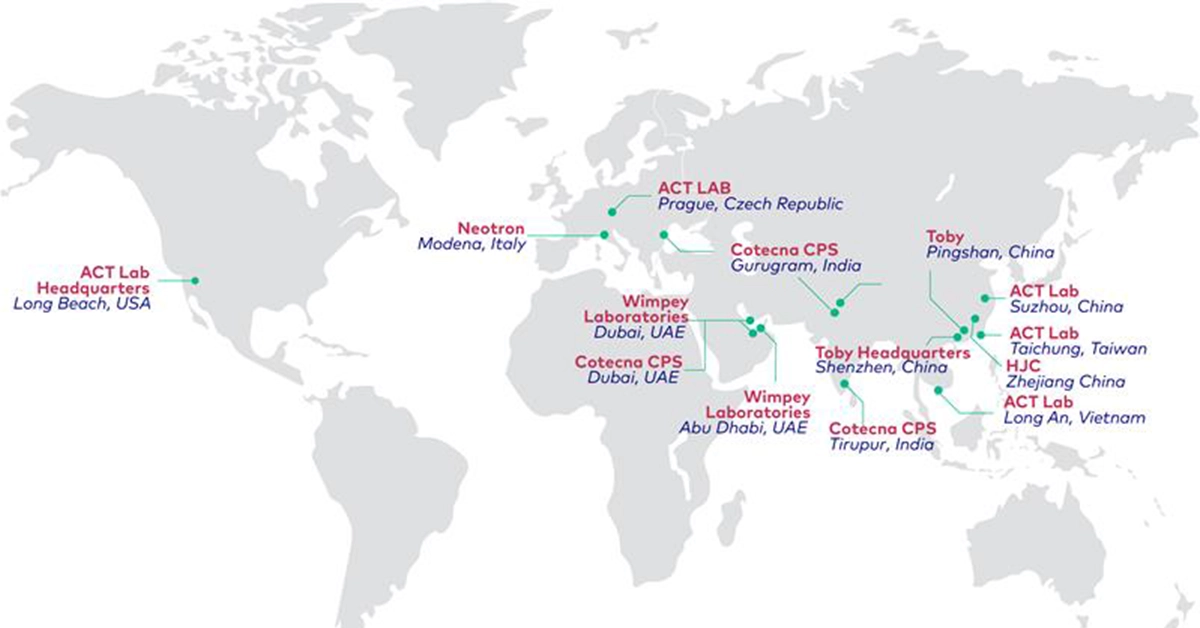
Discover Cotecna CPS Entities
Looking to strengthen quality assurance across your consumer product supply chain?
We provide testing, inspection, auditing and certification solutions tailored to consumer products, suppliers and target markets.
To learn more about Cotecna Consumer Product Services, or to get a free quote, please contact us.
You can also explore our full range of CPS verification services on Amazon.
Download the free Cotecna Consumer Product Services Brochure.
Follow us on Social Media to keep up with our Adding Strength to Supply Chains series.
About Cotecna
For over 50 years, we have been supporting agriculture, food and pharma, minerals and metals, and consumer products supply chains all over the world. We provide testing, inspection, and certification services to help our clients navigate evolving regulations, ensure product compliance, and support their sustainability journey.
Latest News
22.10.2026
End-to-End Consumer Product Quality Solutions | Cotecna
Discover how consumer product testing, inspection, auditing and certification can help manufacturers, brands and retailers manage quality, safety and compliance.

22.10.2026
Nigeria’s Mining Sector Attracts Renewed U.S. Investment. Don’t Forget About Compliance.
As new opportunities emerge in Nigeria’s growing mining sector, U.S. exporters must ensure they understand SONCAP requirements to keep projects and shipments moving smoothly.