



Advanced Mineral Quality Control Through Modern Laboratory Analysis
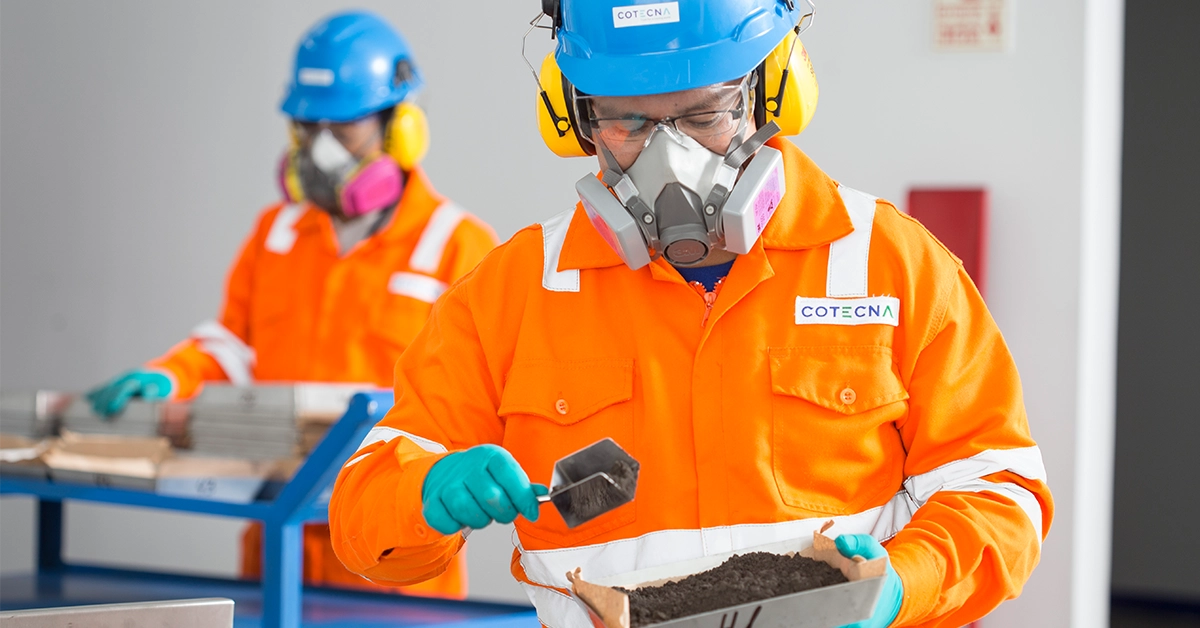
Mineral quality control is fundamental to the mining and metals industry. From exploration and extraction to processing, trading and shipment, decisions depend on reliable information about the composition, quality and characteristics of mineral products.
Understanding the composition, quality and characteristics of ores, concentrates and refined metals helps organizations manage risk, optimize recovery and ensure compliance with commercial specifications.
A mineral sample can contain valuable target elements alongside impurities, moisture and other components that influence its commercial value and processing behavior. Reliable laboratory analysis therefore plays an important role in determining whether materials meet contractual specifications, supporting process optimization and managing quality risks throughout the supply chain.
As mineral supply chains become more technically demanding, modern laboratory techniques are giving mining companies, traders, processors and other stakeholders access to increasingly detailed analytical information. Techniques such as X-ray fluorescence (XRF), inductively coupled plasma optical emission spectroscopy (ICP-OES), inductively coupled plasma mass spectrometry (ICP-MS), atomic absorption spectroscopy (AAS), fire assay, X-ray diffraction (XRD) and scanning electron microscopy (SEM) can address different analytical requirements.
The value of these technologies, however, depends on more than sophisticated equipment. Reliable mineral quality control requires appropriate sampling, sample preparation, validated or suitable analytical methods, competent personnel, quality assurance and traceable processes.
Why Mineral Quality Control Matters
Mineral quality can directly influence commercial settlement, resource estimation, metallurgical performance and supply chain decisions. Reliable analytical data can also reduce disputes, support inventory valuation and improve confidence throughout the minerals supply chain.
For traded ores, concentrates and metals, laboratory results may be used to determine whether material complies with agreed specifications. Variations in elemental composition or the presence of unwanted impurities can affect the value of a shipment or the way it is processed.
For mining operations, analytical data can also support grade control and process optimization. Timely information about ore composition can help operators understand changes in feed material and make informed decisions about processing.
We provide inspection, sampling and analysis services across the metals and minerals supply chain, with laboratories and technical teams positioned in key markets and trade routes. Its services cover activities from mine sites through ports, smelters and warehouses.
This broader perspective is important because laboratory testing is one part of an interconnected quality-control process.
From Sampling to Results: Quality Starts Before the Laboratory
Advanced laboratory equipment cannot compensate for a poorly collected or prepared sample.
Representative sampling is therefore a critical first step in mineral quality control. Even the most advanced analytical methods cannot produce meaningful results if the sample does not accurately represent the bulk material.
Sample preparation is equally important. Crushing, splitting, drying, and pulverization can affect the homogeneity and representativeness of the material ultimately analyzed.
Our recent technical content on mineral concentrates highlights the importance of controlled pulverization in achieving suitable particle size, homogeneity, and mineral liberation. Inadequate preparation can increase variability and compromise the reliability of analytical results.
A robust mineral testing workflow should therefore consider the complete path from sampling to reporting rather than treating the analytical instrument as an isolated step.
Modern Techniques Supporting Mineral Analysis
Different analytical techniques provide different types of information. Selecting the appropriate method depends on the material, elements of interest, concentration ranges, required detection limits, and purpose of the analysis.
X-Ray Fluorescence (XRF)
XRF is widely used for elemental analysis and can provide rapid information about the composition of mineral and metal samples.
The technique is particularly useful when multiple elements need to be assessed efficiently. It can support routine quality control and characterization of ores, concentrates and other mineral materials.
For operations requiring timely analytical information, XRF can be incorporated into laboratory or field-based testing workflows depending on the application and required performance.
ICP-OES
Inductively coupled plasma optical emission spectroscopy, or ICP-OES, is an instrumental technique capable of analyzing multiple elements in a sample.
It can be particularly useful when laboratories need to determine elemental concentrations across a range of metals and minerals. Our laboratory capabilities include ICP-based analysis, and Cotecna has also highlighted the use of ICP-OES for metals and minerals analysis in water, soil and ores.
ICP-MS
ICP-MS combines an inductively coupled plasma source with mass spectrometry to provide highly sensitive trace-element analysis. The technique is capable of detecting elements at very low concentrations, making it particularly valuable for geochemical testing, environmental monitoring, exploration programs and the analysis of precious and strategic metals where trace impurities can significantly influence product quality.
Atomic Absorption Spectroscopy
Atomic absorption spectroscopy, or AAS, is another established analytical technique for determining specific elemental concentrations.
While modern laboratories may employ multiple instrumental methods, AAS remains relevant for applications where the technique is appropriate for the analyte and concentration range.
Fire Assay
For precious metals such as gold and silver, fire assay remains an important analytical method.
The technique has a long history in precious-metal analysis and is used to determine metal content through a controlled assay process. Our assay capabilities include fire assay alongside modern instrumental techniques such as XRF, ICP-OES, ICP-MS and AAS.
The choice between analytical methods is therefore not necessarily a question of replacing traditional techniques with newer ones. Effective laboratory programs often combine established methodologies with modern instrumentation according to the commodity and analytical requirement.
Going Beyond Elemental Analysis
Mineral quality control is not limited to determining how much of a particular element is present.
Understanding the mineralogical characteristics of a sample can also be important for resource evaluation, processing and recovery.
X-Ray Diffraction
X-ray diffraction, or XRD, can be used to identify and quantify minerals based on their crystal structure and composition.
This information can help specialists understand the mineral phases present in a sample and support decisions related to mineral processing and characterization.
Scanning Electron Microscopy
Scanning electron microscopy, or SEM, provides detailed information about mineral surfaces, morphology and texture.
When combined with appropriate analytical capabilities, SEM can help provide a more detailed understanding of how minerals occur within a sample.
These techniques demonstrate why modern mineral laboratories increasingly need a multidisciplinary approach. Chemical composition, mineralogy and physical characteristics can each contribute different pieces of information needed to understand material quality.
Our assay and testing capabilities include chemical assay, mineralogical testing, physical property testing, metallurgical testing and environmental and geochemical testing.
The Role of Quality Assurance and Laboratory Competence
Technology alone does not guarantee reliable analytical results.
Laboratory competence, method selection, equipment maintenance, calibration, personnel competency, quality-control procedures and appropriate documentation all contribute to confidence in test results.
ISO/IEC 17025:2017 is the international standard for the competence, impartiality and consistent operation of testing and calibration laboratories. The standard provides a framework for demonstrating that laboratories can produce valid and reliable results.
For mineral testing, quality assurance can include the use of reference materials, duplicate analyses, blanks, calibration controls and other procedures appropriate to the analytical method and application.
Sample traceability is another important consideration. Maintaining an appropriate chain of custody helps laboratories and their clients track samples through the testing process and supports the defensibility of analytical results.
Mine-Site Laboratories Bring Testing Closer to Operations
One development supporting faster mineral quality control is the deployment of mine-site laboratories. By bringing analytical capabilities closer to exploration projects, operating mines and processing facilities, organizations can reduce turnaround times and gain faster access to critical data for grade control, process optimization and operational planning.
Our mine-site laboratory services are designed to provide high-quality testing and analysis in real time, helping address accessibility challenges. Applications can include geochemical analysis, metallurgical testing and environmental monitoring.
For mining operations, faster access to analytical information can support grade control, process optimization and operational decision-making.
The appropriate laboratory model will depend on factors such as sample volume, location, required turnaround time, analytical scope and quality requirements. In some situations, an on-site laboratory may be appropriate. In others, laboratory outsourcing or a combination of on-site and centralized testing may provide greater flexibility.
Integrating Laboratory Data into the Supply Chain
The ultimate objective of mineral quality control is not simply to generate laboratory reports. It is to provide dependable information that can support decisions.
When analytical results are integrated with inspection, sampling, weighing and other verification activities, stakeholders can gain a more complete view of material quality and quantity.
This is particularly relevant in international mineral trade, where commercial transactions can depend on reliable information about cargo specifications and quality.
Our metals and minerals services extend across inspection, sampling, testing, weighing, assay, metallurgical testing, laboratory outsourcing and mine-site laboratory services.
This integrated approach can help companies manage quality risks and support contractual and operational requirements throughout the supply chain.
Choosing the Right Mineral Testing Approach
Selecting the most appropriate analytical method requires a balance between accuracy, detection limits, turnaround time, cost and the intended application. In many cases, laboratories employ multiple complementary techniques rather than relying on a single testing method. For example, XRF may be used for routine elemental screening, while ICP-MS may be selected for trace-element analysis and XRD for mineralogical characterization.
Commodity and matrix: Different ores, concentrates, metals and minerals require different analytical approaches.
Target analytes: The elements and compounds being measured will influence method selection.
Required detection limits: Trace-element analysis may require more sensitive techniques.
Turnaround time: Operations requiring rapid decisions may benefit from on-site or rapid analytical capabilities.
Sample preparation: Appropriate preparation is essential for representative and repeatable analysis.
Quality requirements: Laboratory competence, quality assurance and traceability should be considered alongside instrumentation.
Testing scope: Chemical, mineralogical, physical, metallurgical and environmental requirements may need to be addressed together.
Supply chain location: The appropriate laboratory model may vary between mine sites, processing facilities, ports and trading centers.
A capable laboratory partner should therefore offer more than a list of instruments. The value comes from combining appropriate technology with technical expertise, controlled processes and an understanding of the client's operational and commercial requirements.
Building More Reliable Mineral Quality Control
Modern laboratory techniques are transforming the way mineral quality is characterized, monitored and managed across the mining value chain. Advanced analytical technologies such as XRF, ICP-OES, ICP-MS, AAS, fire assay, XRD and SEM provide critical insights into elemental composition, mineralogy and material behavior. When combined with representative sampling, rigorous quality assurance and experienced laboratory personnel, these techniques support more accurate mineral analysis, better operational decisions and greater confidence in commercial transactions.
However, effective mineral quality control depends on the entire analytical workflow. Representative sampling, appropriate sample preparation, suitable methods, competent personnel, quality assurance and traceability are all essential components of reliable results.
For mining companies, traders, processors and other stakeholders, the objective is ultimately the same: access to dependable analytical information that supports better decisions, reduces quality risks and strengthens the integrity of the minerals supply chain.
We combine inspection, sampling, testing and laboratory expertise to support clients across the metals and minerals lifecycle, from exploration and mining through trading, smelting and recycling. Its network of laboratories and technical experts provides analytical solutions designed around the specific requirements of different commodities and supply chain stages.
Looking to strengthen your mineral quality control program?
Our metals and minerals experts can help you identify appropriate inspection, sampling and laboratory testing solutions for your commodities and operational requirements. Contact us today to discuss your testing needs or request a quotation.
Cotecna Metals & Minerals Global Network
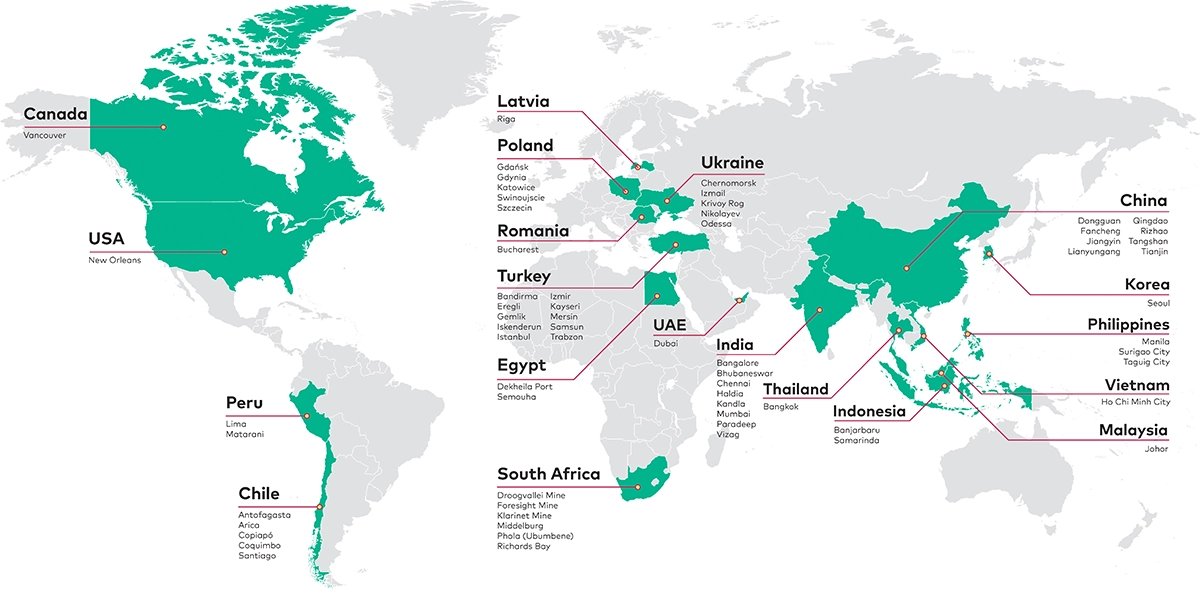
Our network covers over 180 offices and laboratories globally.
Discover Cotecna Metals & Minerals Entities
Cotecna (China, South Africa)
Download the free Cotecna Metals & Minerals Brochure.
To learn more about Cotecna Metals & Minerals Services, or to get a free quote, please contact us.
Follow us on Social Media to keep up with our Adding Strength to Supply Chains series.
Latest News
27.10.2026
Advanced Mineral Quality Control Through Modern Laboratory Analysis
Discover how modern laboratory techniques such as XRF, ICP-OES, ICP-MS, XRD and fire assay improve mineral quality control, accuracy and decision-making.

26.10.2026
LATAM Journey H1 2026: A Semester of Growth, Innovation and Commitment
Discover the highlights, milestones, and stories that defined the first six months of the year in our LATAM Journey H1 2026 publication.