



Pulverization as a Critical Factor in Mineral Concentrates
By: Denis Astupiña J, Lead Supervisor
In mineral quality control, spraying is much more than just a size reduction. It is the key stage where it is ensured that the subsample sent to the chemical laboratory is truly representative of tons of material.
1. The challenge of liberation and homogeneity
The technical goal is to achieve a P95 (or even P100) in fine meshes (#140 or #200). Without this proper particle size, the metal content can remain encapsulated within the mineral matrix, preventing the digestion acids from performing a full attack.
Consequence:
Grade results skewed towards lower values and high variability in duplicates, triggering alerts in analytical accuracy controls.
2. The risk of the "laminated" or coarse sample
Sending a poorly prepared sample to the chemical laboratory directly compromises the integrity of the results:
- Lamination:
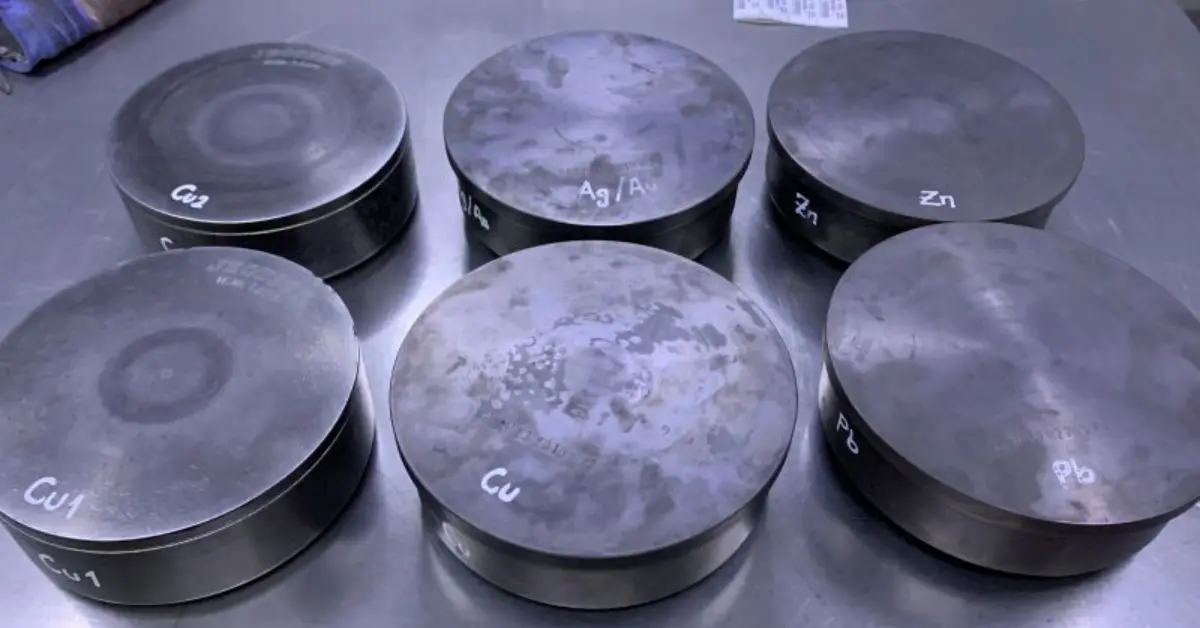
In concentrates with a high Au or Ag content, metal particles can deform due to mechanical pressure, forming sheets. This deformation results in an inhomogeneous distribution of the metal in the sample. - Coarse samples:
If the target granulometry is not met, the fundamental sampling error increases exponentially. This affects analytical repeatability, as each aliquot will contain a distinct distribution of metal particles.
3. Control protocols
To ensure quality in sample preparation, rigorous controls are applied:
- Time optimization:
Determine the optimal spray time for each type of material, minimizing the generation of heat by friction and avoiding adhesion or lamination. - Particle size control (Sieve Test):
Perform sieving tests at the beginning and during the process to validate compliance with the particle size target. - Use of cleaning materials:
The use of sterile silica or quartz between high-grade samples is an indispensable technical requirement to avoid cross-contamination and ensure reliable results.
Conclusion
The accuracy of a chemical analysis depends to a large extent on proper mechanical preparation. Controlled spraying ensures homogeneity, representativeness and correct mineral release, while problems such as lamination, contamination or poor grain size generate bias and reduce analytical reliability.
In mineral concentrates, the quality of the result is directly linked to the quality of the sample preparation.
Do you need to ensure the reliability of your analyses?
At Cotecna del Perú, we have technical expertise and world-class protocols for the preparation and analysis of mineral concentrates.
Request our services and receive specialized advice:
📩 minerals.latam@cotecna.com
About Cotecna
For over 50 years, we have been supporting agriculture, food and pharma, minerals and metals, and consumer products supply chains all over the world. We provide testing, inspection, and certification services to help our clients navigate evolving regulations, ensure product compliance, and support their sustainability journey.
Latest News

30.10.2026
Beyond Carbon Footprint: A Practical Guide to More Sustainable Businesses
Explore how GHG inventories, emissions verification, Life Cycle Assessment, energy management and ESG assurance support credible business sustainability.

30.10.2026
Strengthening Cotecna's Global Metals & Minerals Network Through Leadership Engagement
Mark Houchin's global visits highlight Cotecna's commitment to technical excellence and operational alignment, while focussing on strong customer partnerships worldwide.